Published On:
Posted by gossip lanka live

Sigiriya

Sigiriya

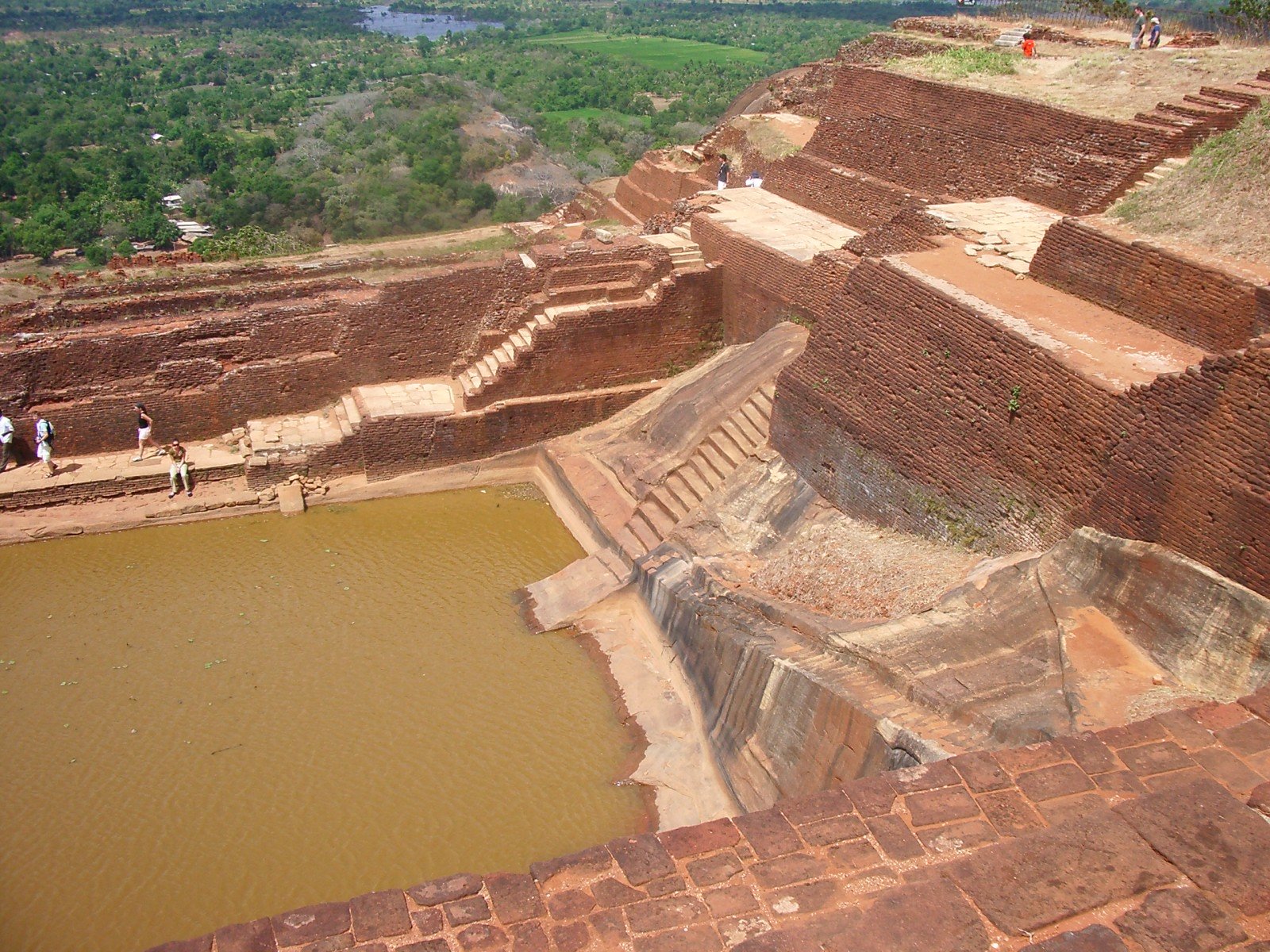
 Sigiriya, located in Sri Lanka, has been described by the Sri Lanka Tourism Promotion Bureau as "part hedonistic pleasure palace, part fortress and part sacred complex," and is one of the oldest tourist attractions in the world. A UNESCO World Heritage site since 1982, the complex consists of an enormous rock, the summit of which was once covered with buildings and surrounded by gardens. Although there are various theories about the historical function of the site, Lonely Planet notes that the "visible ruins today suggest a significant urban site complete with relatively sophisticated architecture, engineering, urban planning, hydraulic technology, gardening and art."


King Kasyapa's Fortress Palace

    • The first theory about the creation and purpose of Sigiriya connects the complex to the reign (from 477 to 496 AD) of King Kasyapa. According to legend, Kasyapa built the structures atop the summit of the rock after murdering his father, King Dhatusena (walling him up alive) and seizing power from his half-brother, Mogallana. The palace and fortress were built to protect the usurper from the avenging armies of Mogallana.

    Buddhist Monastery

    • Lonely Planet outlines a different theory about Sigiriya supported by "archaeological, literary, religious and cultural evidence, rather than local legend." This theory proposes that Sigiriya functioned as a "long-standing Mahayana and Theravada Buddhist monastery built several centuries before the time of King Kasyapa." As early as the 3rd century BC, the site operated as a hermitage and had developed into an important monastery by the 10th century AD (and abandoned after the 14th century).

    Frescoes

    • Remnants of plaster and pigment remain throughout the site. Although only a fraction of the approximately 500 images remain, the frescoes of Sigiriya "represent the earliest surviving examples of a Sri Lanka school of classical realism" according to Discoversrilanka.com. The still-visible images of women have been variously interpreted as "Heavenly Maidens," ladies of the Kasyapan court, "Lightning Princess and Cloud Damsels" and, according to Lonely Planet, Tara Devi, a Mahayana Buddhist goddess.

    Mirror Wall Graffiti

    • According to DiscoverSriLanka.com, a path runs up the western and northern sides of the Sigiriya rock to "provide access to the seeming inaccessible summit." This path is protected by a 9 1/2 foot high plaster wall so highly polished and glazed that "even today, after fifteen centuries of exposure to sun, wind and rain, one can see one's reflection in it." Called the Mirror Wall, it displays the writings of visitors to the Sigiriya complex between the 7th and 11th centuries AD. As the graffiti is translated, it offers scholars a valuable historical resource.

    Lion Rock

    • When climbing the pathway of the rock to the summit, a platform emerges halfway up the north side. Here once sat the giant lion that gave Sigiriya, "Lion Rock," its name. In order to reach the summit of the rock, travelers had to pass between the lion's paws and through its mouth. DiscoverSriLanka.com notes that "based on the ideas described in some of the graffiti, this Lion staircase could be visualized as a gigantic figure towering majestically against the granite cliff, facing north, bright coloured and awe-inspiring." Today, only the paws and several steps remain


      Lion Rock, otherwise known as Sigiriya, is a archaeological site with a cube shaped rock at the center. The rocks is made primarily out of volcanic rock and reaches heights of 1214 feet.


      During the 4th century, the site was used as a Buddhist monastery, more importantly it was surrounded by a complex under the rule of King Kasyapa. Reminicient of a castle, this geological wonder is surrounded by lush jungles and a mud moat. The top of the formation is a castle that was rumored to be the pleasure palace of the king. After the king died, the castle was reverted back to a monastery, however due to misuse, the castle fell to ruins.


      One one side of the rock, there is what's called the "Mirror Wall" measuring 460 feet long and 131 feet high. This mirror is a culmination of painted frescoes depicting beautiful women with flowers in their hair. The paintings have disappeared over time, yet they have inspired some of the greatest love poems the world has ever seen. Written on walls of course.


      The stone lion has a narrow, wrought iron, spiral staircase that leads to the terrace, which was located below what was once a lion head. The paws are now all that remains. Just like in a movie, the visitors would have had to gain access to the castle through the lion's mouth.


      If you'd like to visit Lion Rock-Sigiriya, just be aware that the staircase to reach the summit is so narrow that only one foot can be placed at a time. If you don't enjoy tricky climbs, this may not be the site for your next visit. However if you like adventure, this place is full of it.

About the Author

Posted by gossip lanka live on 2:03 AM. Filed under . You can follow any responses to this entry through the RSS 2.0. Feel free to leave a response

By gossip lanka live on 2:03 AM. Filed under . Follow any responses to the RSS 2.0. Leave a response

0 comments for "Sigiriya"

Leave a reply

Related Posts Plugin for WordPress, Blogger...

Model Of The Week

Gossip Lanka News | Hot Image

Gossip Lanka News And Srilankan Model | එහෙන් මෙහෙන් ඇහෙන නිවුස් එකම තැනකින් බලා ගන්න.
Powered by Blogger.